Researching, Building Instruments, Teaching and Performing Healing Music since 1982
PO Bx 443, Bowie, Arizona 856o5
...An outreach of Saint Michaels Abbey
Abbot Dr. Mar +David Michael, MEd, MS, DD, ThD
719 421 9109
abbotdavid@protonmail.com
Providing Hands-on training, experience and performance in Music Theater and in making instruments in the sacred Hebrew tradition of the Tabernacle of Moses and the Temple of Solomon.
Sutton Hoo Lyre-Harp Coming Soon for $130 plus $18 shipping!
Sutton Hoo Lyre-Harp is
claimed to be of Saxon design but many
consider it to be of an earlier Celtic influence. This instrument
comes as either a 6-stringed Pentatonic tuning or as a
10-stringed Diatonic tuning in replacing the horned harp currently
being sold on
this site.
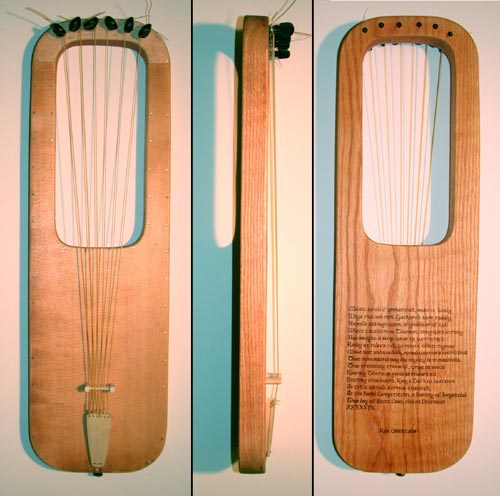
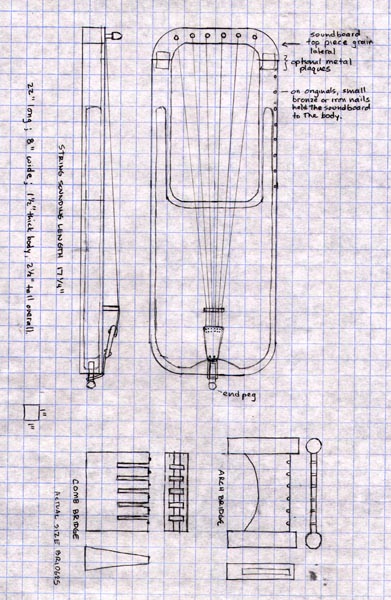
The plans of the Sutton Hoo Lyre-Harp below show its construction. In our case, we are adding a piezo pickup system to each of these instruments that we sell. The cost for the 6-string version is suggested to be $130 and the for the 10-string version is $150. We should begin shipping later this month with a dark Mahogony frame and Werstern Red Cedar back and front. The tuners will be standard zither pins with an included tuning wrench.
|
Battleharp Music Now Offering
Performance Workshops
Workshops We currently offer harp making and in playing the kinnor lyre-harp with the development of a 12 part harp choir. Future workshops include:
We are very excited about our harp and voice choir in the ancient style of the Temple of Solomon where 12 people will play 12 harps and sing 4 to 12 separate polyphonic melody lines - all in harmony. 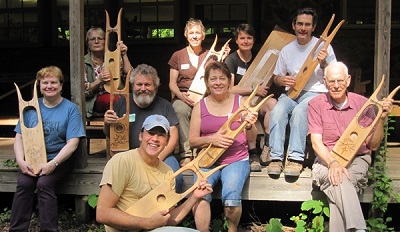 Each harp-singer will play and sing the same melody line
with the words of the psalms in
English but re-translated to follow the metric and word order and
importance of
the original Hebrew words of the Psalms. When combined with
other
harp-singers, this provides for minimally a 4 part harmony of harps and
voices.
Each harp-singer will play and sing the same melody line
with the words of the psalms in
English but re-translated to follow the metric and word order and
importance of
the original Hebrew words of the Psalms. When combined with
other
harp-singers, this provides for minimally a 4 part harmony of harps and
voices. |
Beginnings
 Battleharp
Music has existed in various expressions since 1982 wherever
Abbot David has lived. Over the last 25 years, he
has taught music, harp making and performance to kids and
adults alike. Since these early days, David has earned a BA
(High
Honors) in Dance Drama and Music and is K-12 Teacher Certified in DoDDS
in
Music, Theater, Video Production and various computer-based
technologies.
Battleharp
Music has existed in various expressions since 1982 wherever
Abbot David has lived. Over the last 25 years, he
has taught music, harp making and performance to kids and
adults alike. Since these early days, David has earned a BA
(High
Honors) in Dance Drama and Music and is K-12 Teacher Certified in DoDDS
in
Music, Theater, Video Production and various computer-based
technologies.
In addition, Abbot David holds a MEd in
Educational Administration, a MS (With Distinction)
in computers (think computer music and digital robotics here) and a
DD and ThD in
Theology. He is also a University of Hawaii Certified
Historical Preservationist.
These credentials complement
his passion for
theater, music and performance which he now carries into the
exceptional classes he
teaches in
encouraging students to think outside the conventional theater, music
and
instrument making 'box' to achieve new music and acting' fusions and in
the invention of new
kinds of instruments and performances.
His over 25 years of teaching K-12 and
college classes in Hawaii and Colorado gives him great confidence in
the classroom and on the stage having performed extensively in the US
and Britain. Battleharp Music will be offering workshops
starting in the Fall of 2015 in Buena Vista,
Colorado.
Bible Character Performances
A list of Bible Character performances
offered by Dr
David for church and other events will be available soon.
For booking these performanbces, contact Abbot David
directly.
abbotdavid@protonmail.com
Music
Certification Diploma
- Scenography
- Lighting Design
- Sound Production
- Music Composition
- Costuming
- Acting
- Directing
- Scriptwriting
- Voice in Song
- Harp and Voice Choir
- Interpretive Dance
- Harp Making
Abbot David has recently published a book to be used for the harp making classes.
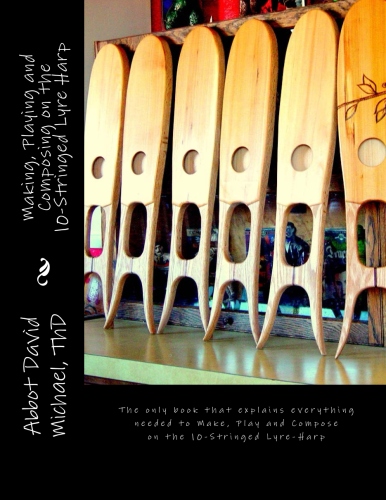 Making
, Playing and Composing
Making
, Playing and Composing on the 10 Stringed Lyre Harp
By Abbot David Michael, ThD
8.5" by 11" with 66 pages
$19.95
Order Kindle Book at: Amazon.com
This is the only book in print that provides detailed step by step instruction to even the novice in making, playing and composing on the ancient 10 stringed Lyre-Harp. This harp called a Kinnor by the Israelites dates to the time of King David and has been an instrument of importance for over 3000 years in many cultures.
This simple construction method in fully explained steps with lots of pictures reveals the secret theory behind how resonance is designed and created in an instrument. This is a must have books for any stringed instrument maker whether they are just beginning or advanced in their skills.
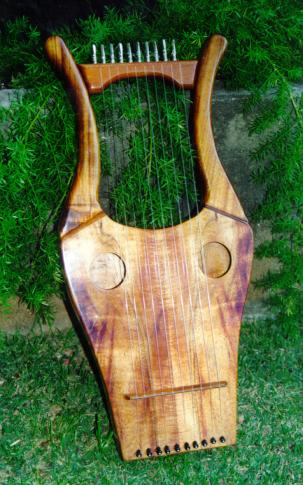 Concert
Temple Kinnor
Concert
Temple KinnorThe Concert Kinnor Harp-Lyre is made by special order only. it is made of the wood of the bible harps called Acacia that is found in Hawaii known as Koa.
CONCERT HARP NO LONGER BEING MADE FOR PUBLIC SALE!
The Concert Kinnor Lyre-Harp comes with tuning key and 1/4" thick plywood nagahyde covered plush case. Also included is the new book written by Abbot David Michael called, "Making and Composing on the 10 Stringed Lyre Harp" seen to the left of this column.
Check for Availability Before Ordering!
| Hear what the harp
sounds like! Sorry for the bad recording - will have a better recording up soon! http://battleharp.com/battleharp3.wav |
 THIS HARP SOON TO BE DISCONTINUED!!!!
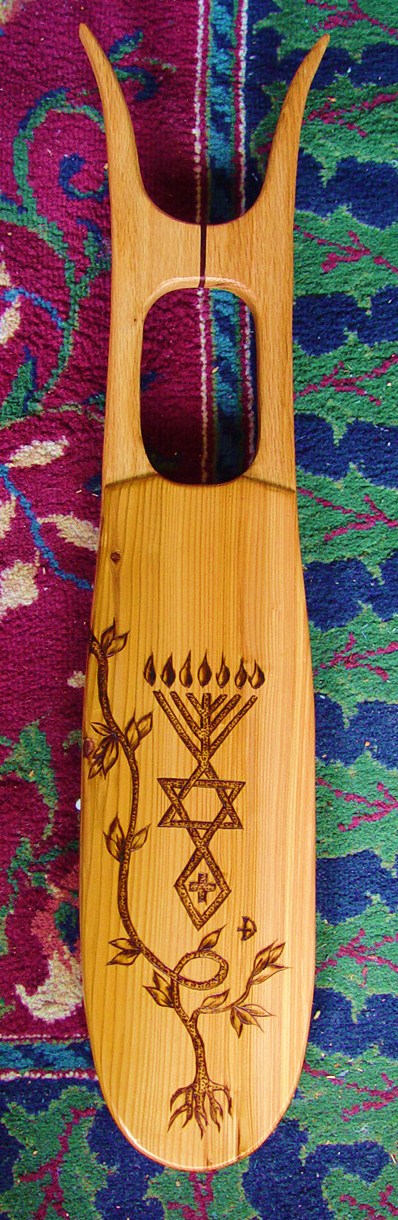
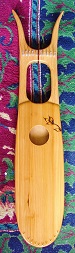
The Shepherds Harp is a back-packers sized harp made of various hard and soft woods. To any Battleharp, I can add a personalized wood-burned engraving starting at an additional $20 to the discounted online price of $150 which is over 15% off from the normal retail price of $180. Add $18 for shipping and handling for destinations in the Continental US for a total of $168.00. Click the "BUY NOW" button below to place your order.
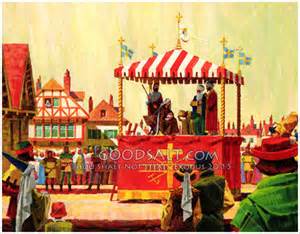
| Mystery Play/Music Performances Battleharp
Music are available to provide performances of
the Medieval
styled Mystery Plays accompanied harps, woodwinds and percussion.
Performance may include a 12 voice
instrument and harp choir with verse.
We are currently accepting and scheduling
performance dates
for venues in NW Arkansas. We are
requesting a donation to cover our
travel
costs, food and overnight stays if needed. Contact Abbot
David
for more information on scheduling. battleharp@gmail.com
 |
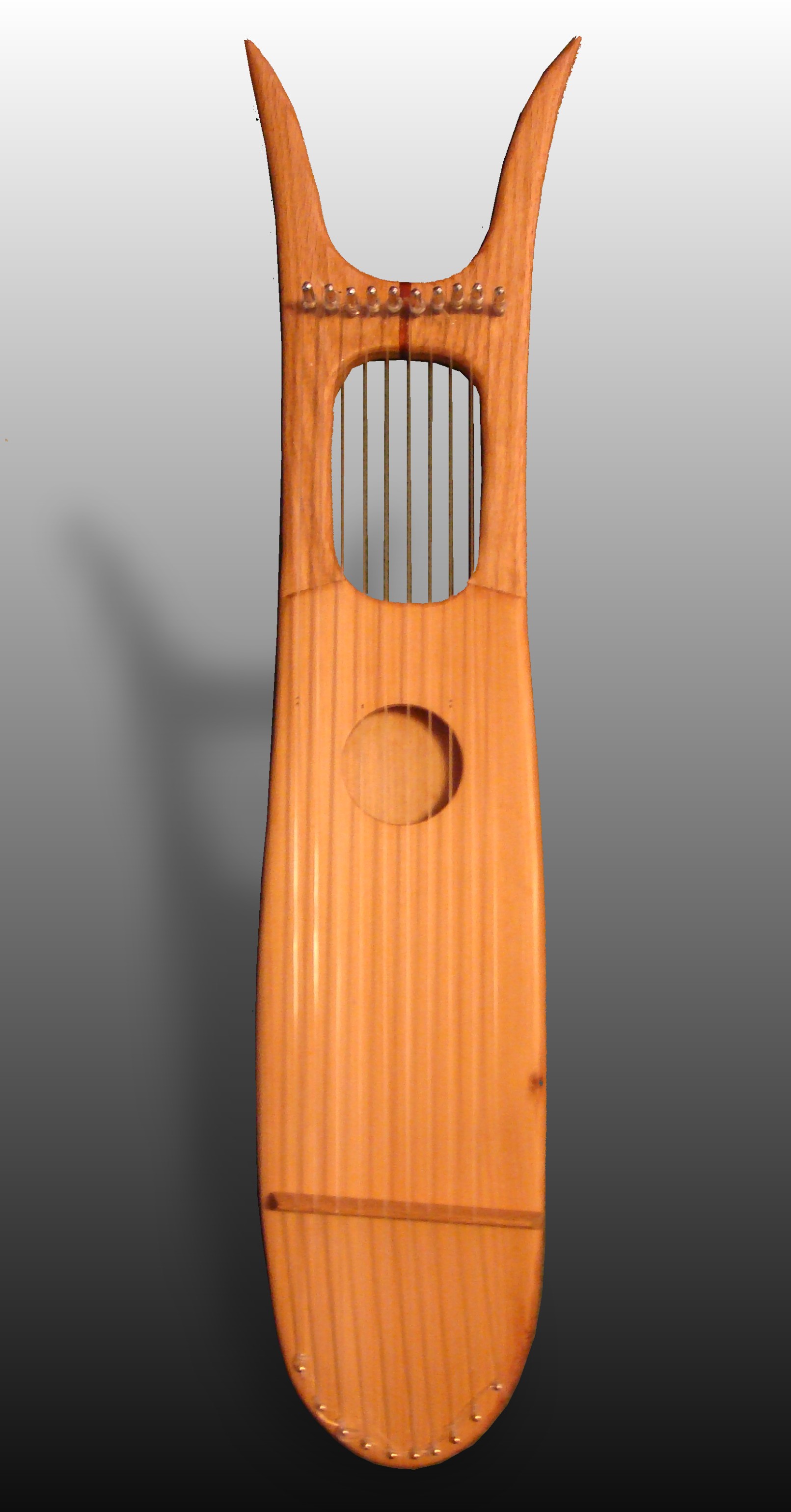
Back of the Shepherds Harp
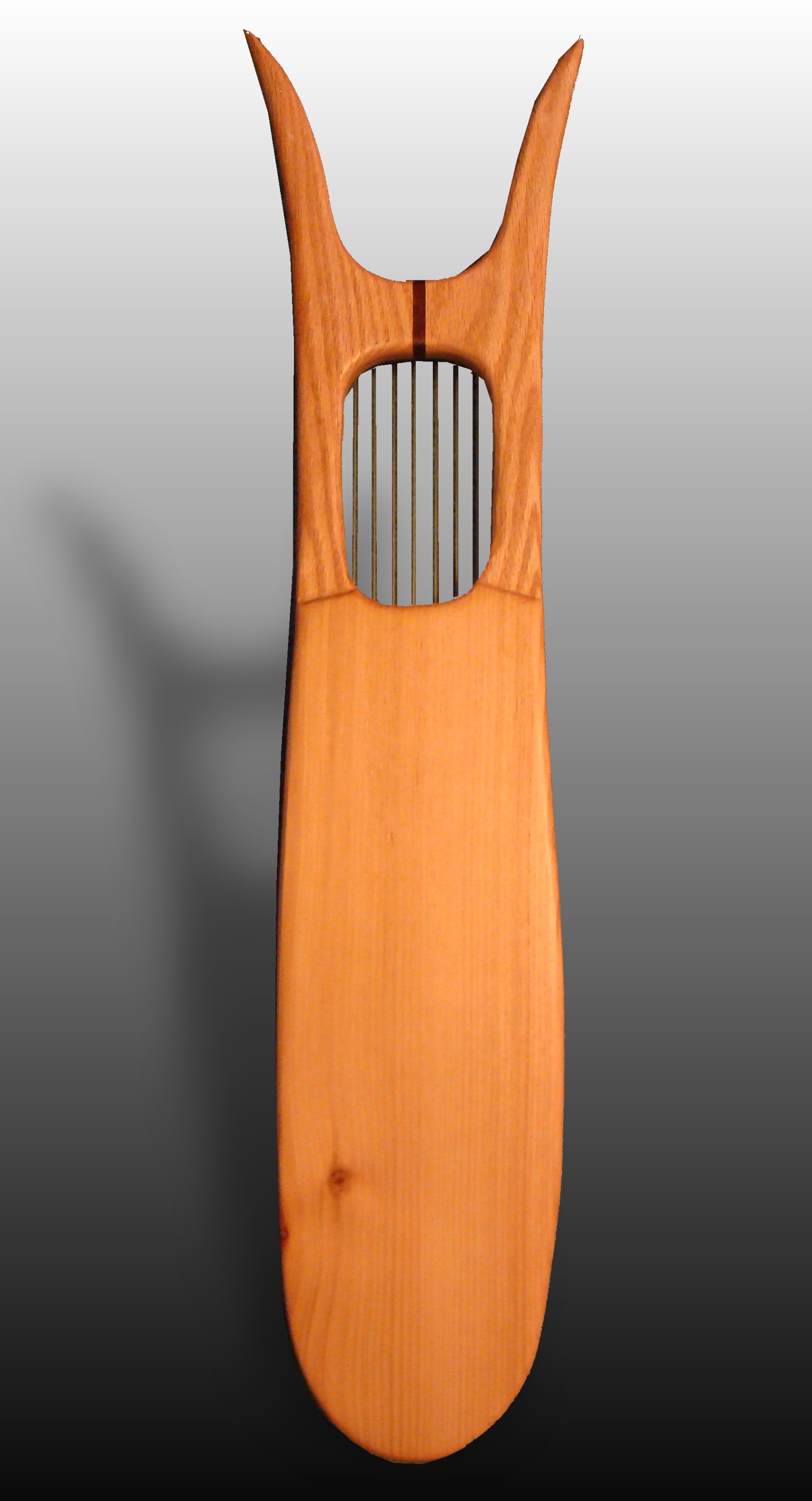
Example of wood-burned design by
Abbot David Michael